Filtering Stages and Methods
Pre-Filtration
In cidermaking, this typically takes place after pressing to remove pectin and, though not as common for olive oil or winemaking where solids are typically or initially removed by settling and racking off the solids. The purpose is to remove visible sediment prior filtering to avoid clogging up (and wasting) filter media. Some producers, especially for cider, may do this with a bag filter, as filter bags that have a much higher porosity than depth filter media. Another method is a pipe screen filter, which uses a pair of inline filter screens that can either be used simultaneously or one at a time–allowing for continuous operation, as one screen is in use while the other is being cleaned, then the flow can be diverted to the clean screen while the first is removed and cleaned.
Depth Filtration
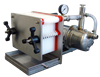
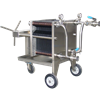
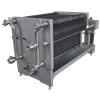
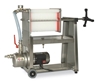
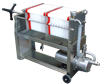
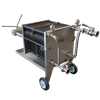
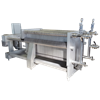
Depth filtration (sometimes referred to as “bulk filtration”) does the heavy lifting. This is done by running product through a series of filter media, usually with a Plate and Frame Filter (sometimes called a “Sheet Filter”) or a Lenticular Filter. When depth filtering, product is typically run through the filter multiple times, decreasing the micron rating (porosity) of the filter media with each pass.
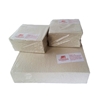
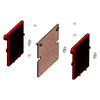
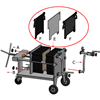
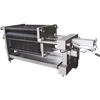
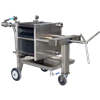
A plate and frame filter utilizes a series of fibrous filter sheets sandwiched between plates (typically a food-grade plastic or stainless-steel) that are channeled to allow product to flow through the filter sheets from the inlet side of the plate to the outlet. The plates and sheets are pressed tightly together to minimize dripping / product loss as the filter sheets fill with product. Filter sheets are relatively inexpensive, so there’s little financial risk in experimenting with different filter grades. The drawback of a plate filter is that product is exposed oxygen and outside “contaminants” while it is being filtered and, as the filter sheets fill up, product is lost due to dripping.
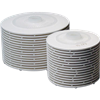
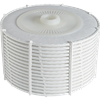
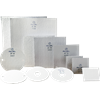
Lenticular filters function similarly; however, instead of filter sheets pressed between plates, lenticulars utilize filter discs (same material as filter sheets) that are stacked together with a central drain channel. These are called modules. Modules can then be stacked within the enclosed lenticular filter housing. Product is pumped into the housing and moves from the exterior of the filter discs, inward to the central drain channel. Because the filter housing is sealed while in use, there is no exposure to oxygen and other outside elements. There’s also no risk of product loss when the filter modules begin to fill. And, although a single lenticular module costs much more than a pack of filter sheets, modules have an exponentially longer life than filter sheets.
Final Filtration
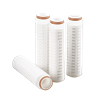
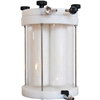
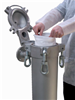
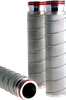
Final Filtration (or “Pre-Bottle Filtration”) is the final stage in the filtering process and is more common for wine than other liquids. This is almost always done using a cartridge filter housing—either for a single cartridge or multiple cartridges—or a series of cartridge filter housings. The purpose of this step isn’t to necessarily further the filtration, but to remove any sediment that may have been missed during depth filtration or developed afterwards. Accordingly, the porosity of the cartridges should be about the same as the porosity of the filters used during the final pass during depth filtration. Though cartridges have a significantly smaller surface area than other filter mediums, they are the only option for precise filtration—i.e. an “absolute” 0.45 µm cartridge filter has an exact porosity of 0.45 µm. Cartridge filter housings are also completely sealed off, ensuring that no outside elements can come in contact with the wine between filtration and bottling.